Category Archives: Learning

Children’s Stories – The Wizard of Othello – Geoffrey (aged 10)

WizardIf there was one thing that Othello Flamel loved, it was his house of mysteries that he inherited from Clocal Flamel, his grandfather.  Othello Flamel was a twenty-two- year-old alchemist who loved exploring his house of mysteries and learning all kinds of spells and enchantments.  One day, two wart-hoggers with great swords attacked and he slaughtered one but the other fled and sounded the alarm, calling thousands, and creating a racket that awoke a rock elite and the wart-hoggers blamed Othello who knew he had to do something.  He remembered the key of safety given to him by his grandfather, which could blow back enemies with the energy and speed of one hundred million kilometres per hour.  If there was one thing Othello loved, it was that key of safety that got him out of trouble.

By Geoffrey (Aged 10)

Leave a comment

Filed under Childrens Story, creative writing, Learning, Posts, Short Story

Tuition Tip – Early Steps To Avoid Stressed Students

Daily Diary Does the Deed

Diary

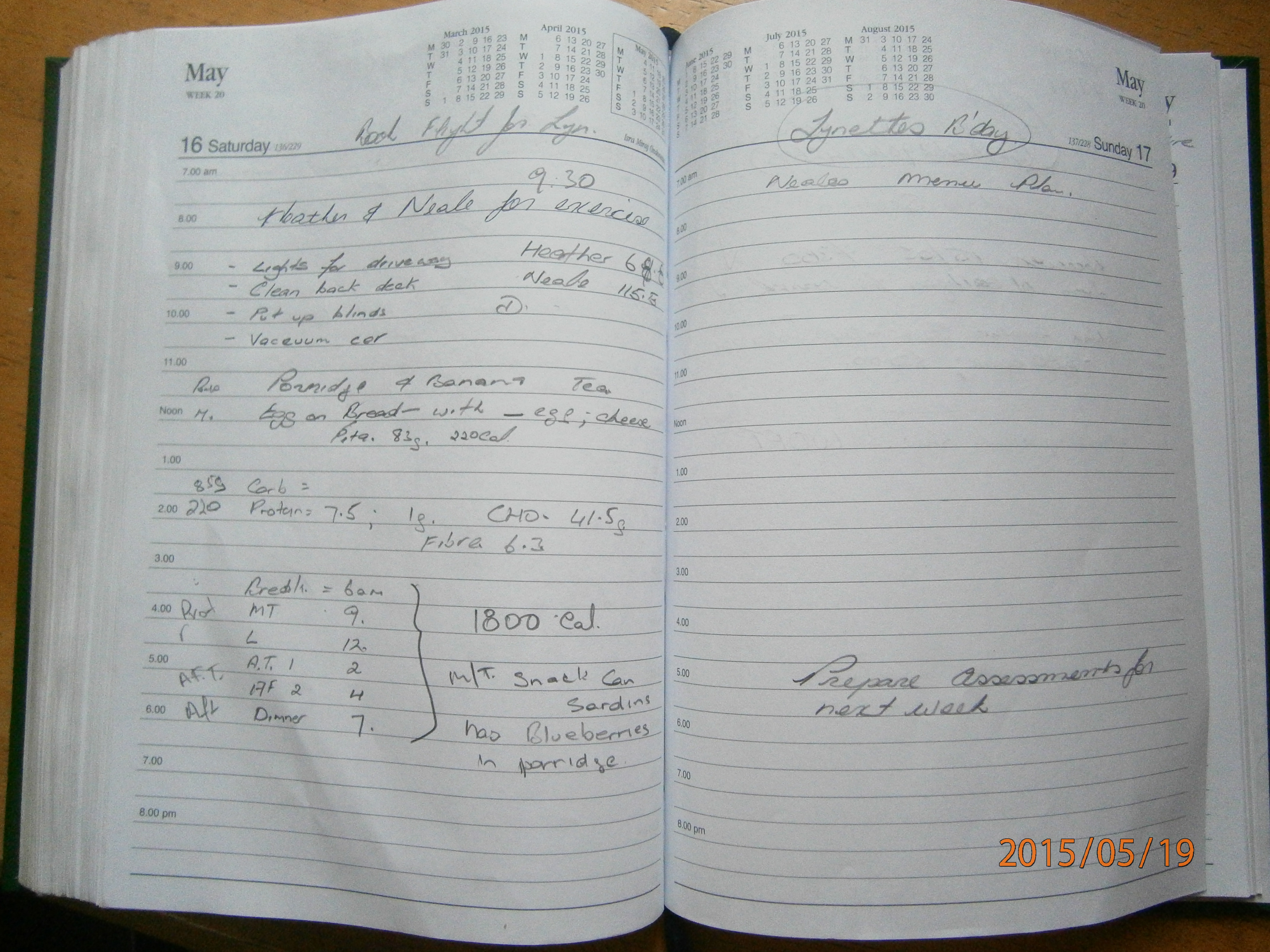
The year is going to progress whether we become involved with it or not.  It has been my experience with students, particularly at secondary school level, that those who do not take control of time will have time controlling them.  It is these students that display symptoms of stress as the year progresses.

Students who learn how to use a diary and planner at the beginning of the year are more likely to feel relaxed as the year progresses.  Keeping a written diary/planner appears to be almost a lost science.  Everything today seems to be electronic with touch pads for keying entries and apps that help to link all the diaries together and co-ordinate your appointments.  This is all very impressive but is it helping your student?

At the beginning of the term or semester your student is given their assignments and due dates.  They are also aware of sports training and events they should be attending; forthcoming birthdays and family events; and school activities.  Showing your son or daughter how to use a diary is a valuable life skill to pass on to them.  Sitting down once a week (my wife and I use Sundays) and running through that week’s entries helps to co-ordinate lifestyles.

Remember: We are all given twenty four hours a day, how you use them is up to you.

Leave a comment

Filed under Learning, Nutrition & Study, Posts, Tuition Tips

Tuition Tip – Let The Things Before School Be Play

Baby ReadingAre there things you can do to help your prodigy to become a person who thirsts for knowledge?

Lately I have been reading a book, “Proust and the Squid’ by Maryanne Wolf which addresses this question.  I would like to share some information with you.

THOUGHTS FROM THE BOOK – Reading and Learning

“The more children are spoken to, the more they will understand oral language.  The more children are read to the more they understand all the language around them, and the more developed their vocabulary becomes.”

“… many efforts to teach a child to read before four or five years of age are biologically precipitate and potentially counterproductive for many children.”  The reason for this is the myelin sheath (fatty coating around nerves to help electrical information to flow) in the angular gyrus (that part of the brain related to language, number processing, spatial cognition, memory and attention) is not sufficiently developed until five to seven years of age.  It develops in all children at different rates and in girls faster than boys.

Sometimes your five year old is just not ready for school and your young lad may not be ready until seven years of age.  By that time they are in year two or three and maybe well behind at school.  It is not that they cannot learn, it is just their brain was not ready for them to learn.  They can catch up, but by this time they may need some assistance.

Leave a comment

Filed under Learning, Posts, Tuition Tips

Tuition Tips – When they look at the work and don’t understand what is going on!

Eye Tracking“Why am I the only person in this class who doesn’t get this?” 

Eventually they begin to believe “I must be a real dummy I just don’t understand why I keep getting this wrong!”  Their self-confidence disintegrates and at times their behaviour will follow.  After all “What is the point of turning up every day if I can’t learn this?”

What is happening with this student?  What would happen if you saw the number zero as a one? For one thing sometimes five plus one will equal six and other times it will equal five.  If you are in primary school and just learning about numbers and maths these things will make it confusing.  You won’t understand why sometimes ten is ten and sometimes it is eleven. Everything will become an exercise in guess-work for you.

These students will also have trouble seeing decimal points, and fractions are just another language when your eyes skip over the line between the numerator and denominator.

That’s just maths.  When they read “was” it becomes “saw” and whole lines are skipped because the eyes didn’t see the line to read it.  By the time they are in Year 7 their reading comprehension is extremely low and there are gaps in their mathematics because fractions and decimals don’t exist.

Eye Tracking issues occur when the two eyes do not move smoothly and accurately across a line or from word to word.  The student will often lose their place while reading, skip lines, misread short words as in “was” and “saw” and cut off the beginnings and endings of words.

Eye tracking issues are usually corrected by visiting a Behavioural Optometrist who tests for the condition and prescribes glasses that are worn until the condition is corrected.  Normal optometrists do not usually check or test for this condition so if your student has glasses and their school work has not improved it may be time to visit the specialist.

Leave a comment

Filed under Learning, Tuition Tips

Tuition Tips – Getting Your Child Ready For School

Tutor and student

Small group tuition, it’s almost one-on-one

IS YOUR PREPPY READY FOR SCHOOL?

“A stitch in time saves nine.”  How do you know if your pre-schooler is ready for the next big jump into primary school?

Does your child understand these words – “above” “below” “on” “in” “before” “after” “beside” “first” “second” “last’ “stop” “go” “left” “right” “top” “bottom” “middle”?

Pre-school education should help young learners with their spatial skills and prepare them for primary school, but there are times when these skills are not acquired.  This is no reflection upon the child, though not having an understanding can place the young learner at a disadvantage when they first attend primary school.

Can you imagine the difficulty a young learner will have following the simplest of directions if they do not have an understanding of the words from the list above?  In our tuition room we are seeing more instances where the parents of children in Years 1 and 2 are seeking help because their little ones are not keeping up at school.  How can a student fall into difficulty at such an early stage of their education?

Let the early years be play.  Young children learn through play, being read to, and through song.  Have any of these three things changed in the last decade?  Do children play with other children or with their parents like they used to?  Are they being read to by an adult?  Do the songs they listen to teach them about the spatial world around them?

The things we do with our children before they attend school are just as important as the education they receive before they become adults.  If you can get the foundations right the structure is strong.

Leave a comment

Filed under Learning, Posts, Tuition Tips

TUITION TIPS – CREATIVE WRITING WITH WORD GAMES

If your child hates to write, try this.

Ask them to write a simple sentence about a cat: “My cat is fat.” Don’t worry about spelling unless you cannot work out what they meant to write.  In that case ask them to rewrite it with the spelling corrected.

Then ask them to make that sentence one word longer: “My cat is very fat.”

  • Try again, “My cat Biffy is very fat.”
  • Try again, “My old cat Biffy is very fat.”

Then use another word for fat.

  • “My old cat Biffy is very large.”

Now for a prize …. extend this sentence using the word ‘and’ somewhere.

  • “My old cat Biffy is very large and lazy.”

There you are – from four words to nine.

Do it just before dinner, make the prize “You decide what we are having for desert” and it’s all fun.

Leave a comment

Filed under Childrens Story, creative writing, Learning, Tuition Tips

Tuition Tips – Did You Know…

Tuition Logo 2…that most learners will forget the last four weeks of learning over the six weeks of Christmas break?  Pretty much everything learned in November is lost by the time they go back to school in January/February.

Six weeks is a long break from learning and I doubt young minds require so much recovery time.  I come from a sports training background and know that such a break from training for a sports person would be detrimental to their ability to perform.  That is why professional sports people do not take a break, they alter how they train. That is also why we run holiday tuition programs for our students; to keep their minds prepared for the next year.

It is not just the Christmas holidays that causes a disruption to learning.  There appears to be so many events during the year that prevent our students building up momentum in in their learning progress. We have public holidays (about 12 days per year), school holidays (about 12 weeks per year), student free days (at least one after every school break), athletics sports day, swimming day, excursions to …., school camps (1 or 2 weeks per year), …

So, why do our students attend tuition during the school holidays? Because their parents believe education is the best method to open the doors to opportunity as we move through life.

Leave a comment

Filed under Learning, Posts, Tuition Tips

Tuition Tips – Brain Food For The Memory

Diet PlansThere are five essential nutrients for effective brain function, and this includes memory. Many teenagers are low in iodine, as can be said about the general population. It is readily found in some seafood but if you do not eat seafood then you must obtain it from another source.

Decades ago the government placed iodine in table salt so that inland populations may have a non-seafood source of the nutrient. If your family eats salt then it may be beneficial to purchase iodised salt. Other nutrients are omega-3 (from oily fish), iron (meat), zinc (almonds) and the B vitamins.

Two herbs gaining respect for their ability to aid memory are Ginkgo biloba and gotu kola. Ginkgo increases blood flow and fluidity to the brain and improved circulation aides brain function.

The quality of food is so important. We do no good for our children when we give into their tantrums for low nutrient junk food. Be parents to your children now and their friends when they grow up.

Leave a comment

Filed under Learning, Nutrition & Study, Posts, Tuition Tips

Tuition Tips – Brain Food

pacific cruise 2012 074Vitamin C

Now before you go off collecting kindling to burn me for being a witch let’s have a look at how vitamin C can be considered brain food.  The highest concentration of vitamin C in the body is found in the adrenal glands because it is required to make cortisol and adrenalin for conditions of stress.  But the next highest concentration is found in the brain.  Why would the brain require vitamin C?  So the body may produce dopamine, serotonin and melatonin.  Vitamin C helps to keep your sanity as well as your collagen intake.

Leave a comment

Filed under Learning, Nutrition & Study, Tuition Tips

Tuition Tip – Did You Know…

Tuition Logo…that most learners will forget the last four weeks of learning over the six weeks of Christmas break?  Pretty much everything learned in November is lost by the time they go back to school in January/February.

Six weeks is a long time to have a break from learning and I doubt young minds require so much recovery time.  As I come from a sports training background I know that such a break from training for a sports person would be detrimental to their abilities and performance.  That is why professional sports people do not take a break, they alter how they train.

I have witnessed the downfalls in people achieving weight loss because they cannot gain any momentum on their weight loss program.  There was always something preventing them getting up a full head of steam on their weight loss project; birthdays, work functions, anniversaries, weddings, parties, etc..  It may be the same for our students in the education system.  There appears to be so many things that prevent our students building up momentum in their learning progress; public holidays (about 12 days per year), school holidays (about 12 weeks per year), student free days (at least one after every school break), athletics sports day, swimming day, excursions to …., school camps (1 or 2 weeks per year), …

That is why we run holiday programs for our clients.  To us learning is so important to the development of the child that we give tuition hours away to ensure our students return to school not having forgot what they learned in the last month and a half of school but are advanced on what they know.

OUR 342 HOLIDAY PROGRAM 

Leave a comment

Filed under Learning, Posts, Tuition Tips