 Sometimes there just doesn’t seem to be enough hours in a day to fit in what needs to be done, and there seems to be not enough weeks in the year for the school curriculum.
There are forty academic weeks to the Australian school year, little enough time for what needs to be learned. The problem is the school year is not exactly forty weeks. There are a number of public holidays to be removed, and then there are “student free” days also to be taken out. If we remove the school camp that all students seem to be attending these day, sick days and time spent out of school for one reason or another (sports, museums, etc.) then we have a shortened academic year.
This all puts our teachers, and students, under pressure as a larger amount of acquired knowledge is squeezed into a reduced amount of attended time.
“A” initially stood for Academic Year but now I think it should stand for “Attendance”.
So, how do you make a better student? Don’t add to the problem by reducing your student’s school attendance by removing them from school for a week’s holiday because it is more convenient.

 In the rusty old ship where the poor old convicts were kept, was the worst journey I was in. My name is Annie and I had stolen a loaf of bread and two buttons but back then I was living on the street because my ma and pa had passed away. As the ship swayed side to side I saw my friend was paralysed in fear when The Lady Penhryn tore apart like a horrible tsunami. I grabbed wood to use as a float. As we were stranded in the sea a tiny spec grew larger and larger so I realised we were going to be alright.
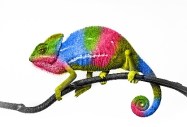 Just before dawn two young explorers were in the jungle walking past a large shrub when they spotted an injured chameleon. They were animal carers so they took the chameleon back to the lab to fix him up and they found out he had a broken back leg. Without bandages, they had to go exploring to find a leaf with a numbing agent called the Squashbugla. Just before the next morning they found the leaves and fixed the chameleon.
 One night Snowy the chimp squeezed through the bars of the metal of his cage at the zoo. He felt happy because he escaped. As soon as he got to the forest he was climbing up trees very high so he could eat fruit. He made his house at the top of the trees. Snowy the chimp lived in the forest for the rest of his life.
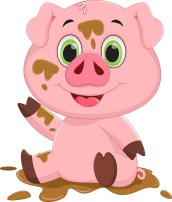 One sunny Monday, Piper the piglet jumped to read the newspaper which said that the Pigalimpiks were on today.
 One dark cold winter, a baby polar bear named Amy was born. She had a silvery coat that everyone loved and she had a beautiful flower in her ear. One afternoon the baby polar bear ran away and saw a hunter kill a penguin and she was so scared that she ran back home. The next day she saw the same hunter again and he was going to kill her Mum. The little polar bear Amy bit him so hard that he cried and she saved her mum and they went home.
 One morning when all the people had gone to work and school, the fruit people popped out to play. Little Apple and Little Pear, who everyone thought were not smart, looked and saw a glass they knew not to touch, but they did. They dropped it and they cried, “How can we fix this glass?” The Apple and Pear glued it together and the other fruit people said “Sorry, we said you were dumb” and “Thank you for fixing it.” When the people came home they slept all night.
 In the middle of the ocean there was a pirate named Red Beard. He was alone. It was a stormy night when lightning struck and it hit the boat which sunk. Red Beard had a red beard and was feeling unsafe. He thought to himself “I should go home.” Because of the storm, his boat sank so he tried to swim. The tide was too rough for the pirate to swim.
 On a dark, stormy night, in the middle of the Pacific Ocean, a pirate ship bobbed up and down. The ship’s captain’s name was Burger Beard. He was a chef and he knew that he made the best burgers in the world. On really long trips he usually ran out of food so he ate the food from his beard. On that stormy night, he had a good feast form his beard.
 The young girl lived in a cottage and today she was thinking how to impress the managers who looked completely friendly but were doing something rude with their hands which they placed over their ears as she tried to persuade them of her perfection. Jenny was cross and she stamped her feet and shouted “I have had enough of this!”. The skinny man with thick eyebrows was smiling, the chubby male with attitude was thrilled and the woman with pointy heels said “You’re in!”. They all stood up and yelled “Welcome to Yelling school!”
 XtraMile Tuition Strategies (North Brisbane) - 0415 049461